Core Overview
Operations Dashboard
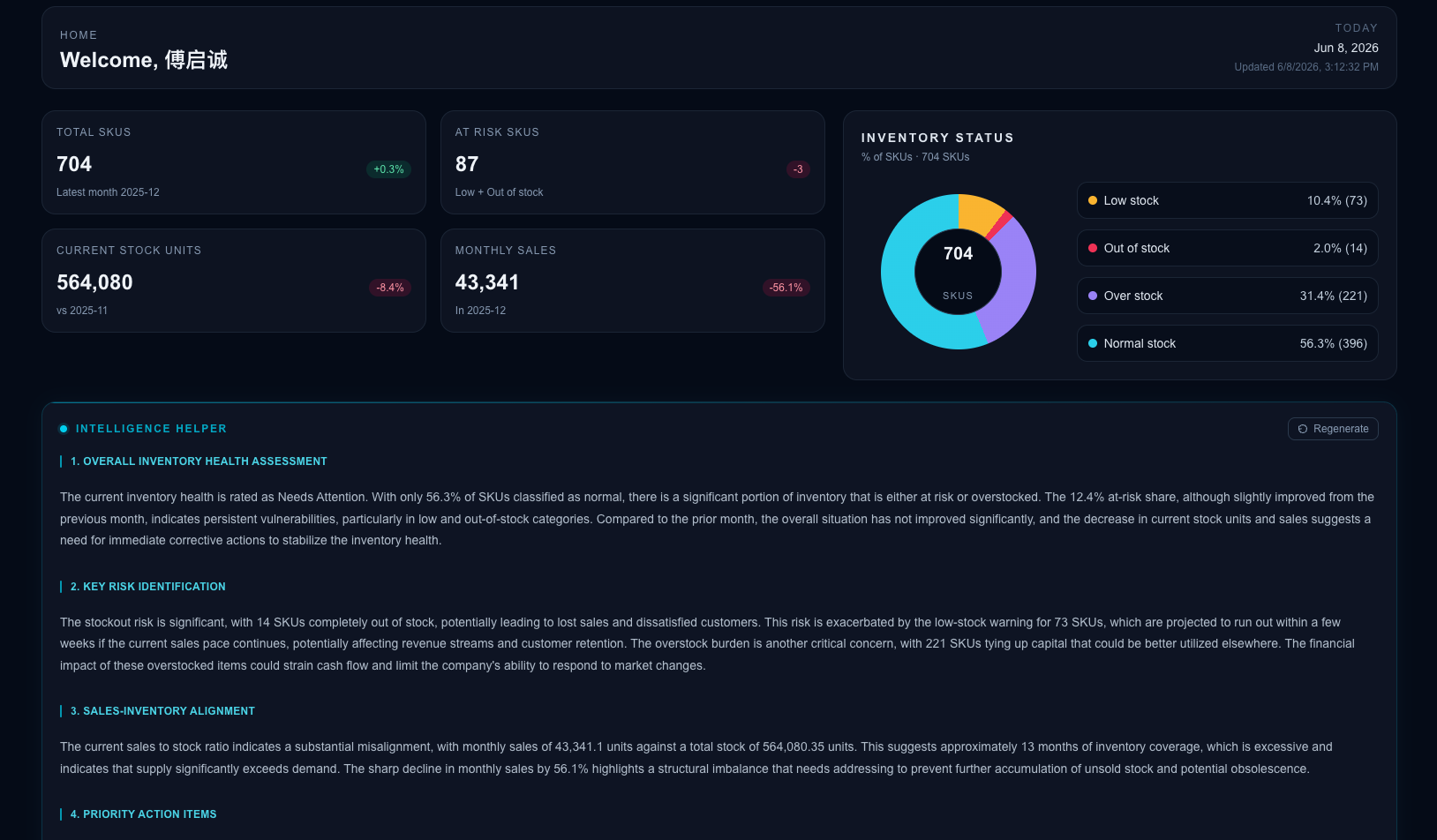
This is the executive landing view for the system, summarizing total SKUs, stock risk, sales movement, and AI-generated health assessment so users can understand inventory exposure in seconds.
M.Eng. Cornell University · Specializing in inventory intelligence, supply chain optimization, and AI-driven decision support systems.

A production-grade, ERP-integrated inventory decision support system built from the ground up.
ERP-Integrated Inventory Decision Support System
Built an end-to-end system connecting directly to Oracle ERP via an automated pipeline, processing live inventory records in real time — delivering operational visibility where it matters most.
Warehouse and supply chain teams often operate with lagging visibility — relying on manual checks, end-of-day reports, or ad-hoc ERP queries. This leads to stockouts, excess carrying costs, and reactive replenishment. Inventory Intelligence solves this with a real-time, AI-assisted decision layer on top of Oracle ERP.
This is the executive landing view for the system, summarizing total SKUs, stock risk, sales movement, and AI-generated health assessment so users can understand inventory exposure in seconds.
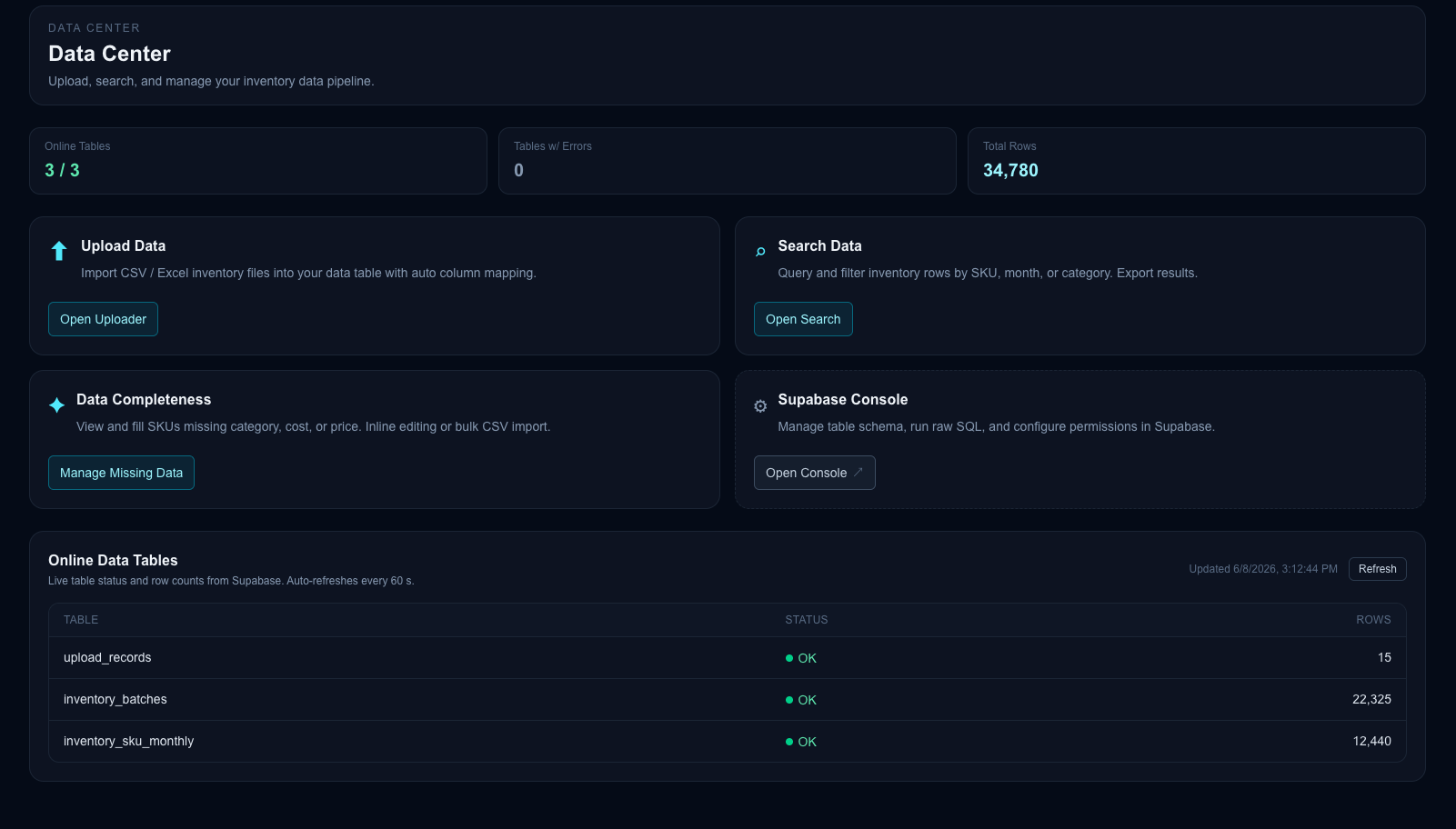
The data center monitors table availability, ingestion health, and row counts, giving operations teams a clear control panel for the inventory data backbone behind every downstream analysis.
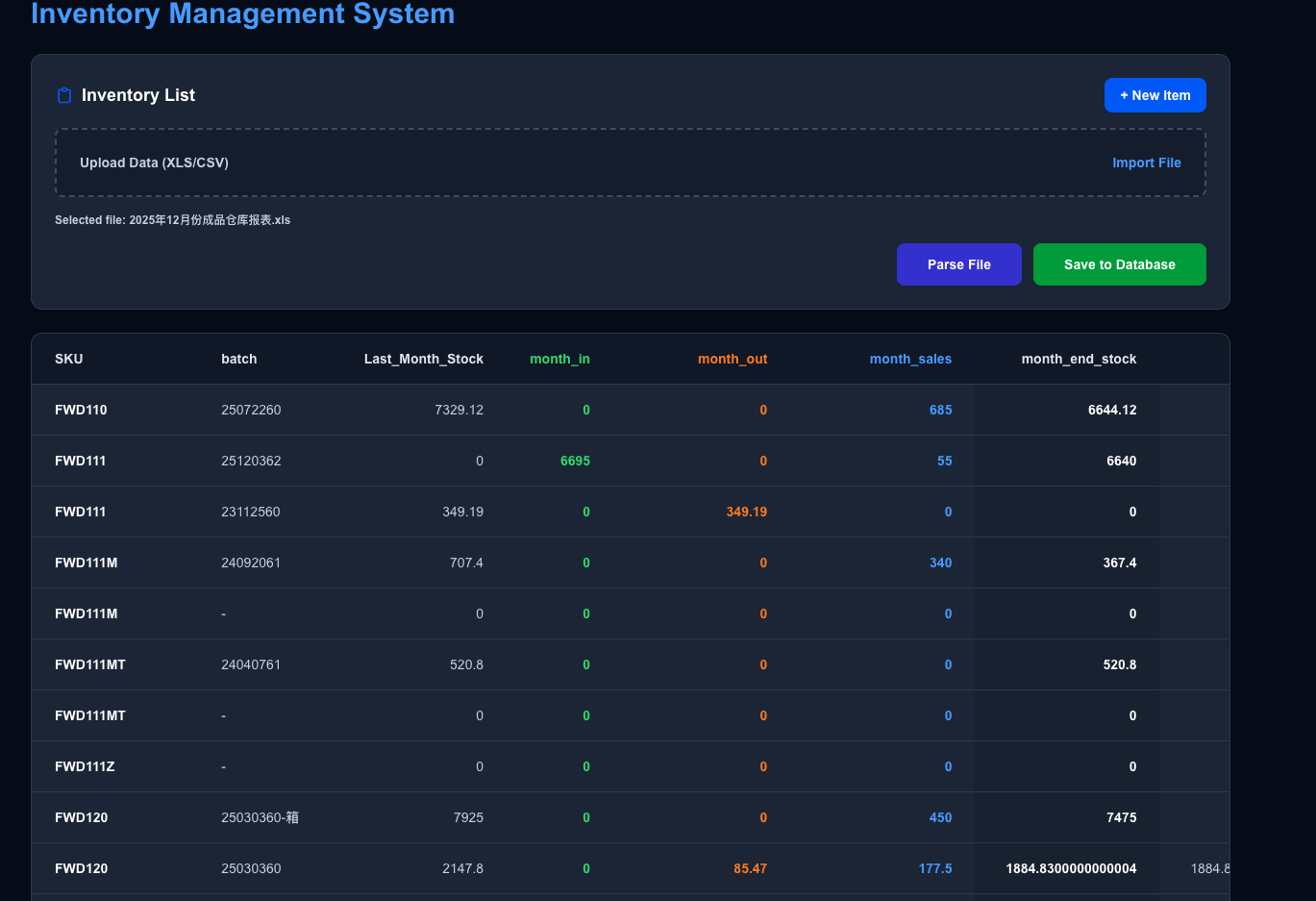
This interface turns raw XLS or CSV files into structured inventory records, allowing users to import new monthly snapshots, validate the parsed schema, and save clean data directly to the database.
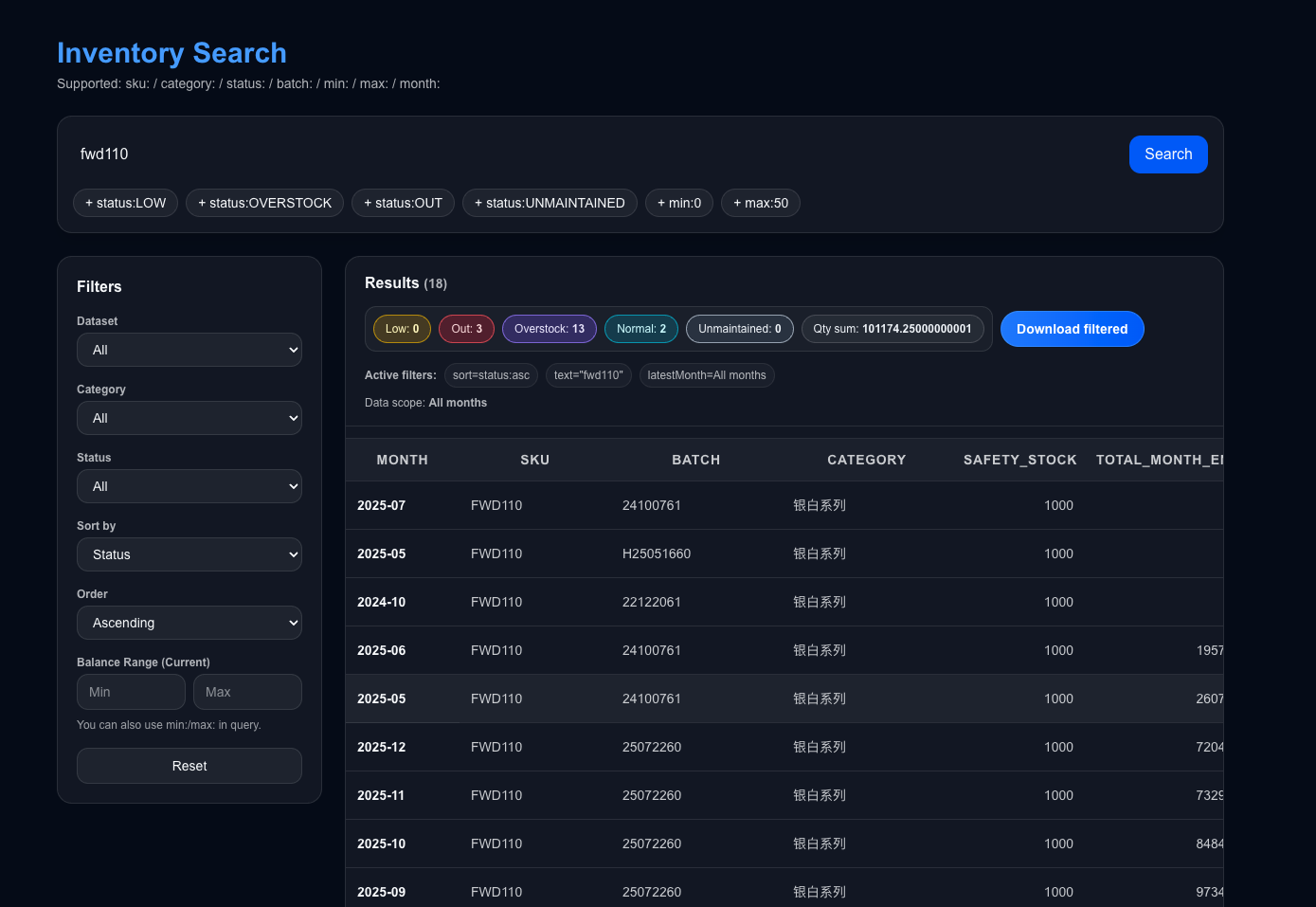
Users can query the inventory by SKU, category, batch, status, and balance thresholds, then export filtered results for investigation, operational follow-up, or ad hoc reporting.
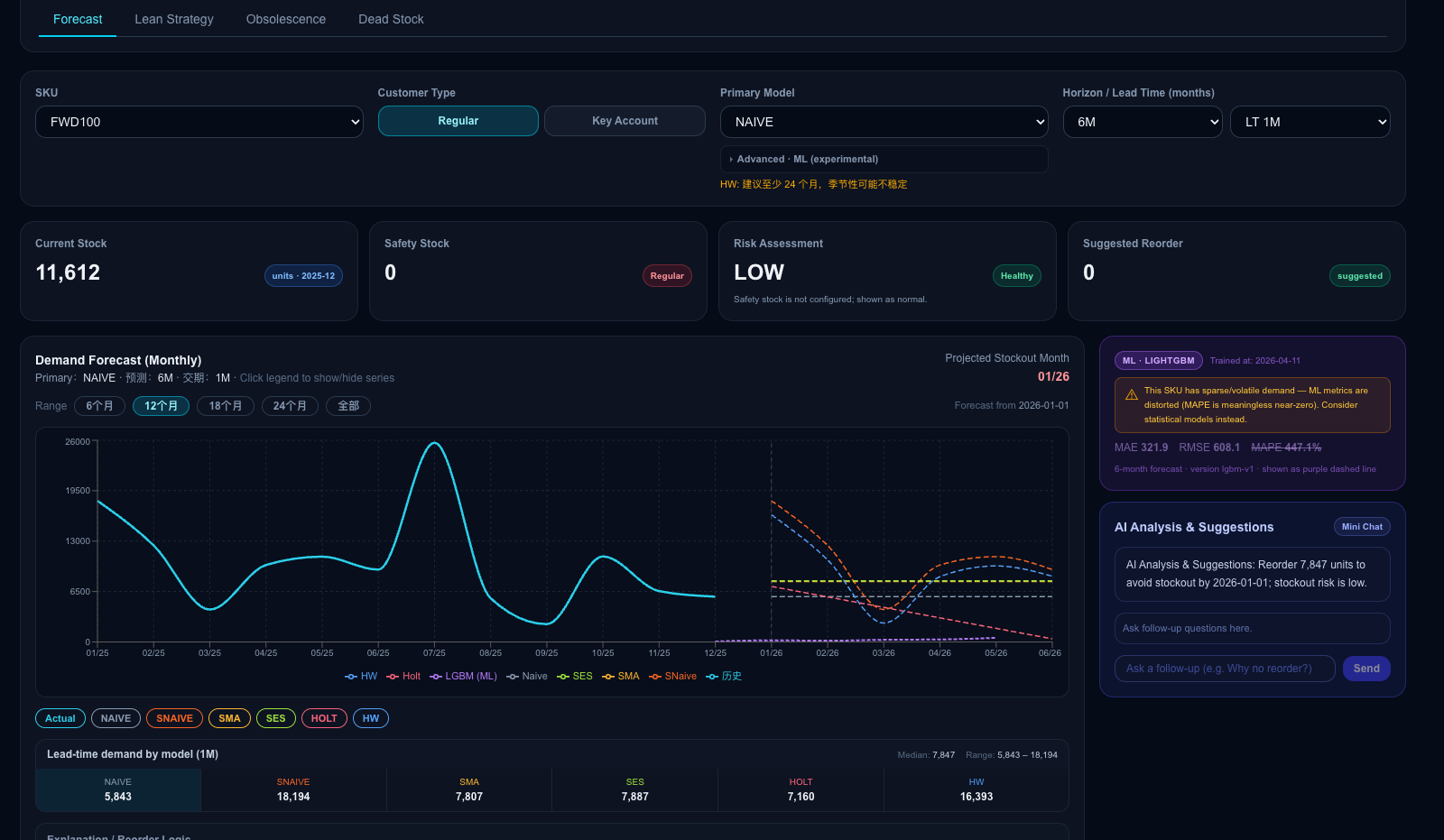
This module compares multiple forecasting models, estimates lead-time demand, highlights stockout timing, and surfaces reorder suggestions with an AI explanation layer for planners.
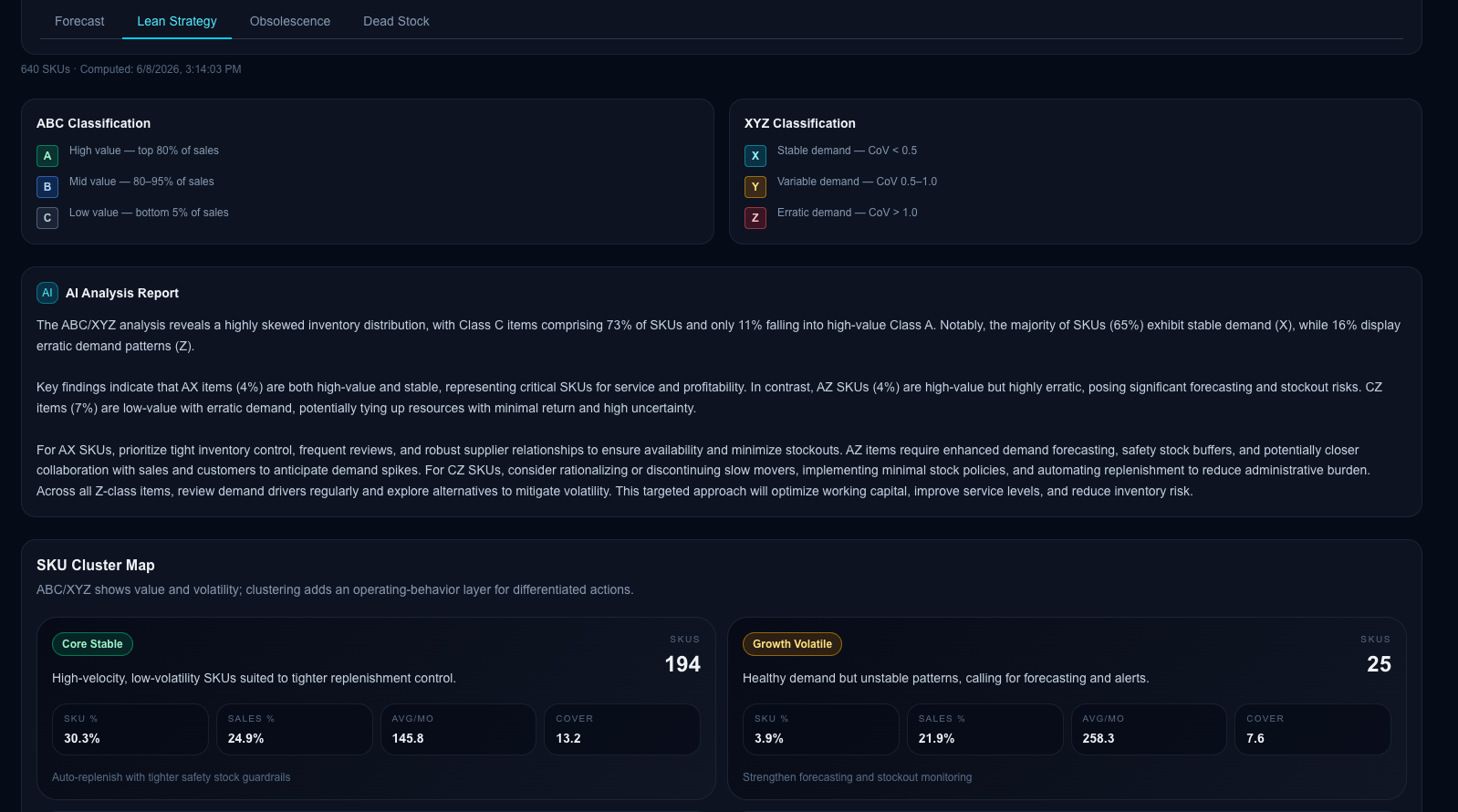
The lean strategy layer classifies demand stability and value concentration, then translates those patterns into differentiated operating strategies that reduce working capital without sacrificing service.
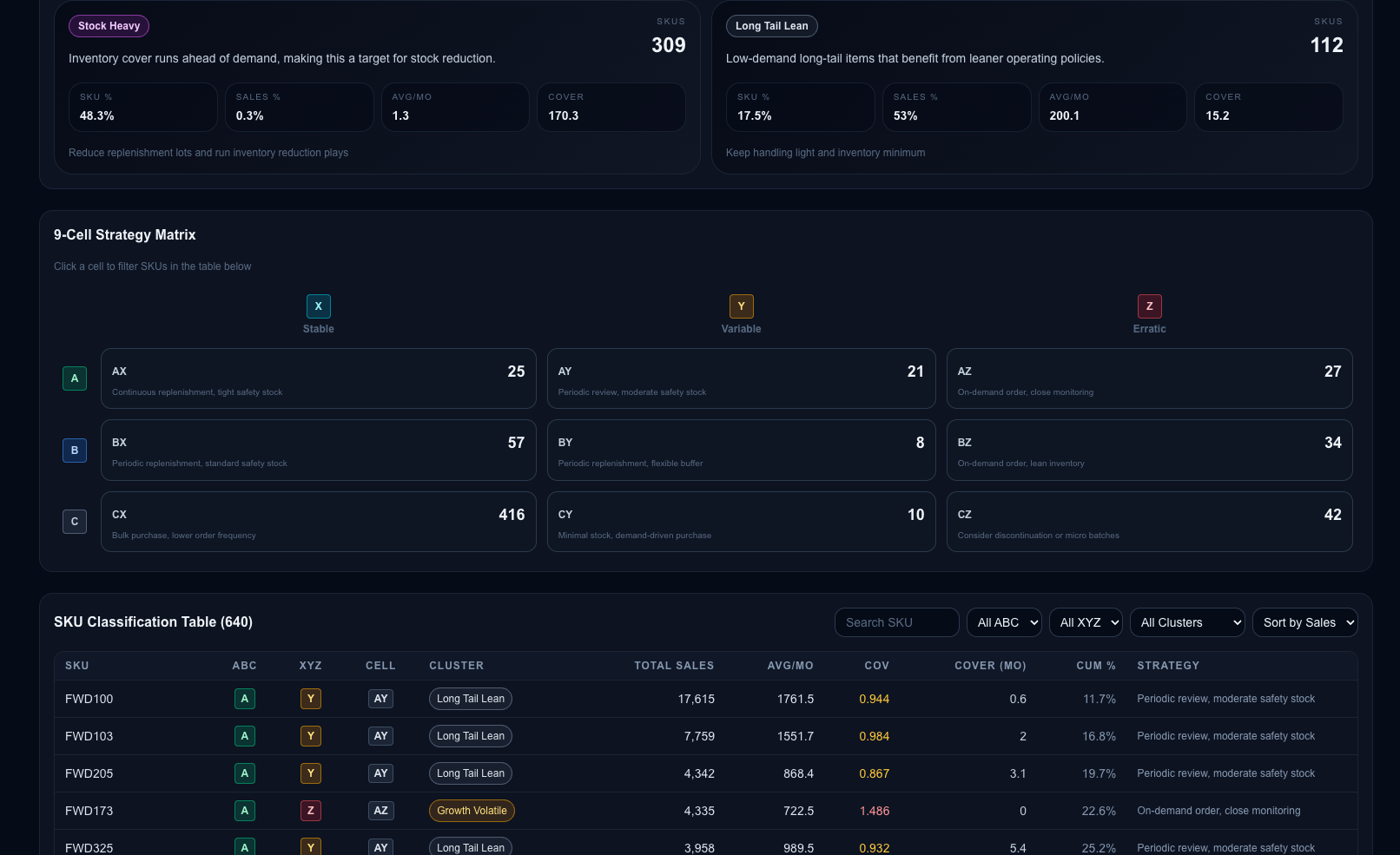
This view maps SKUs into a nine-cell policy matrix so teams can assign replenishment cadence, safety stock posture, and review discipline based on both value and volatility.
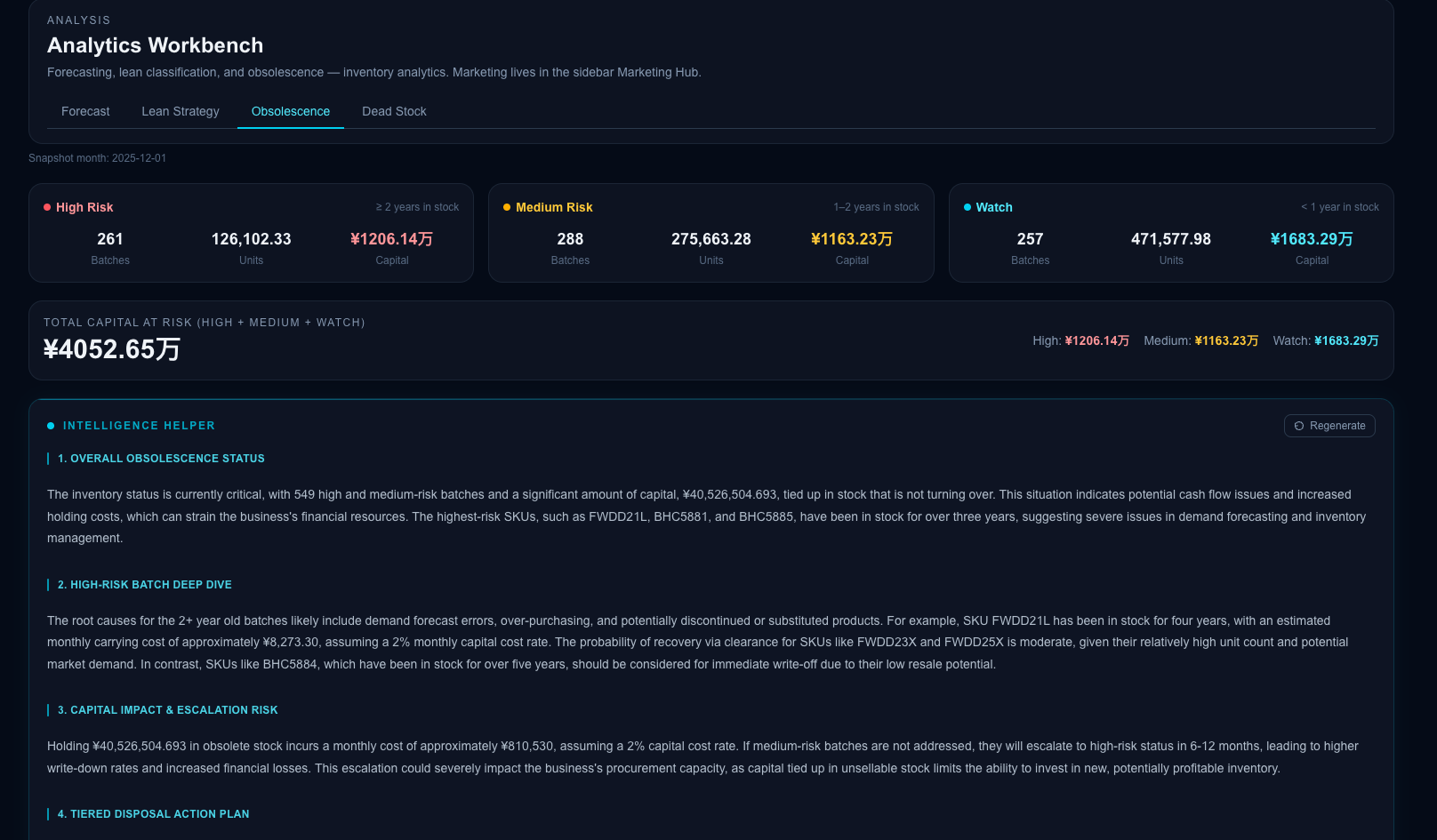
This screen quantifies aging inventory exposure by time-in-stock and capital at risk, then uses AI to summarize the financial implications and escalation paths if action is delayed.
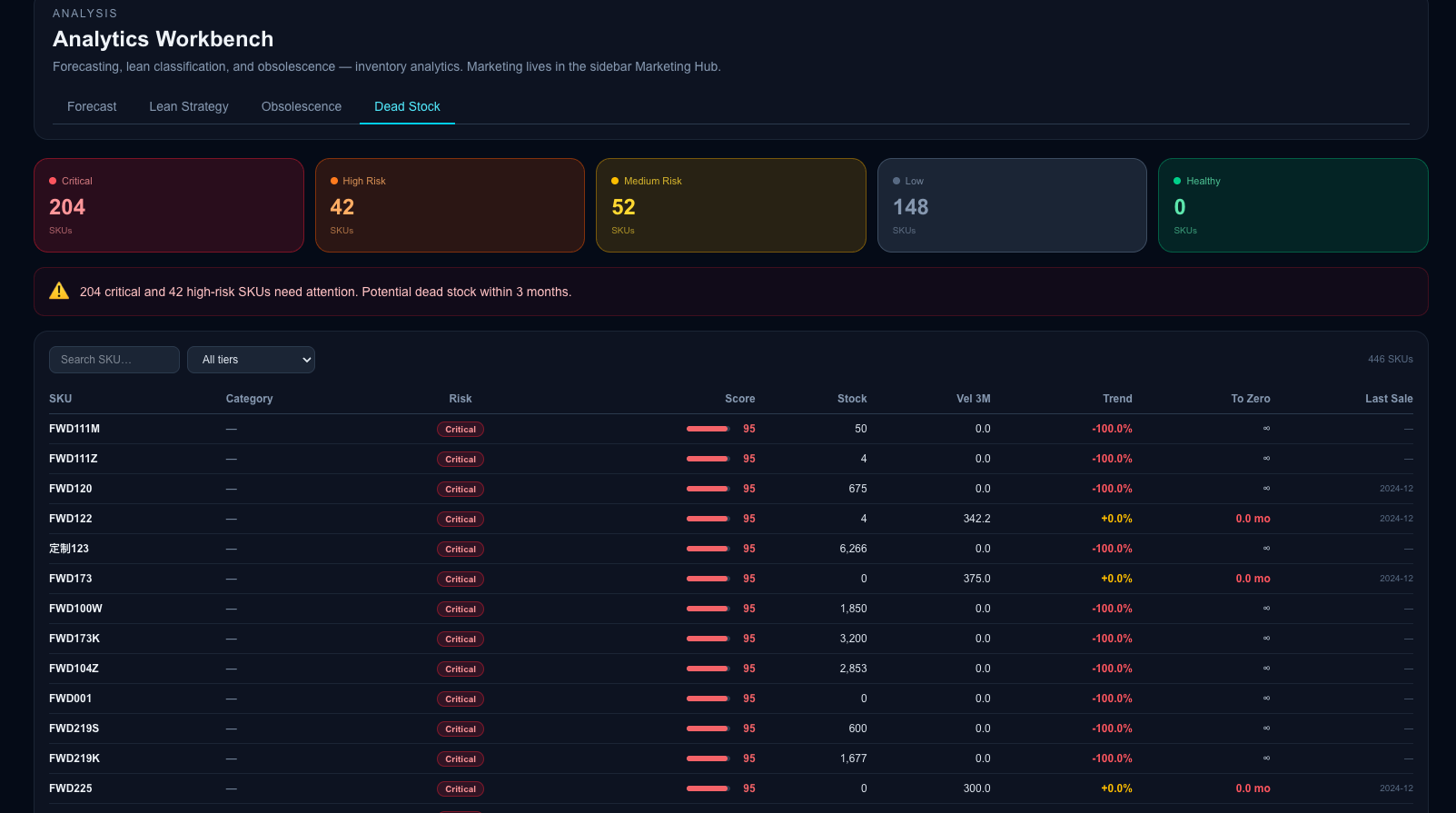
The dead stock monitor scores inactive SKUs by risk, run-out trend, and time to zero so teams can quickly identify which items need liquidation, reset thresholds, or replenishment suspension.
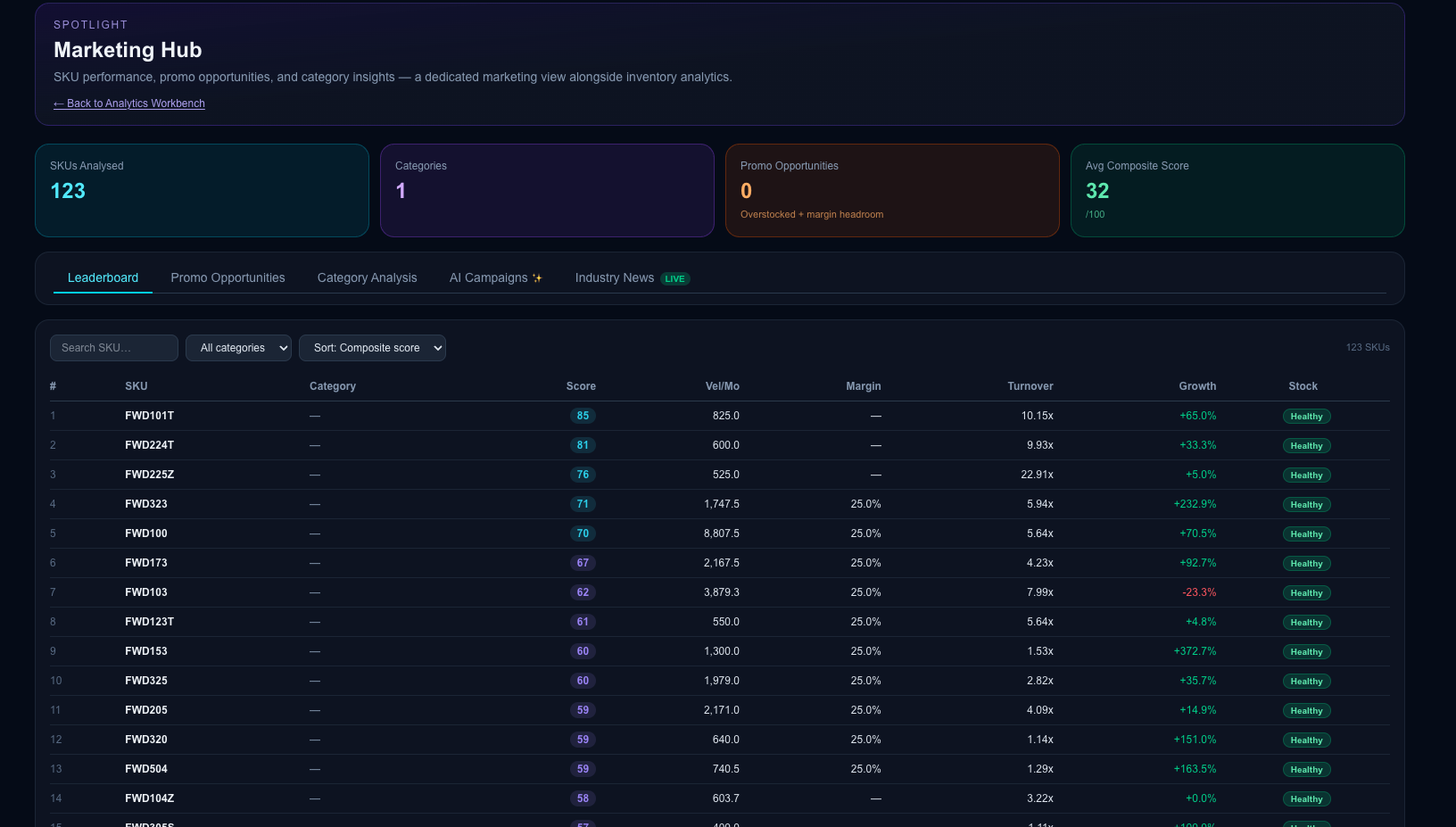
Beyond operations, the system includes a commercial layer that ranks SKUs by composite opportunity score, helping marketing teams spot high-turnover items, healthy stock, and growth-friendly campaigns.
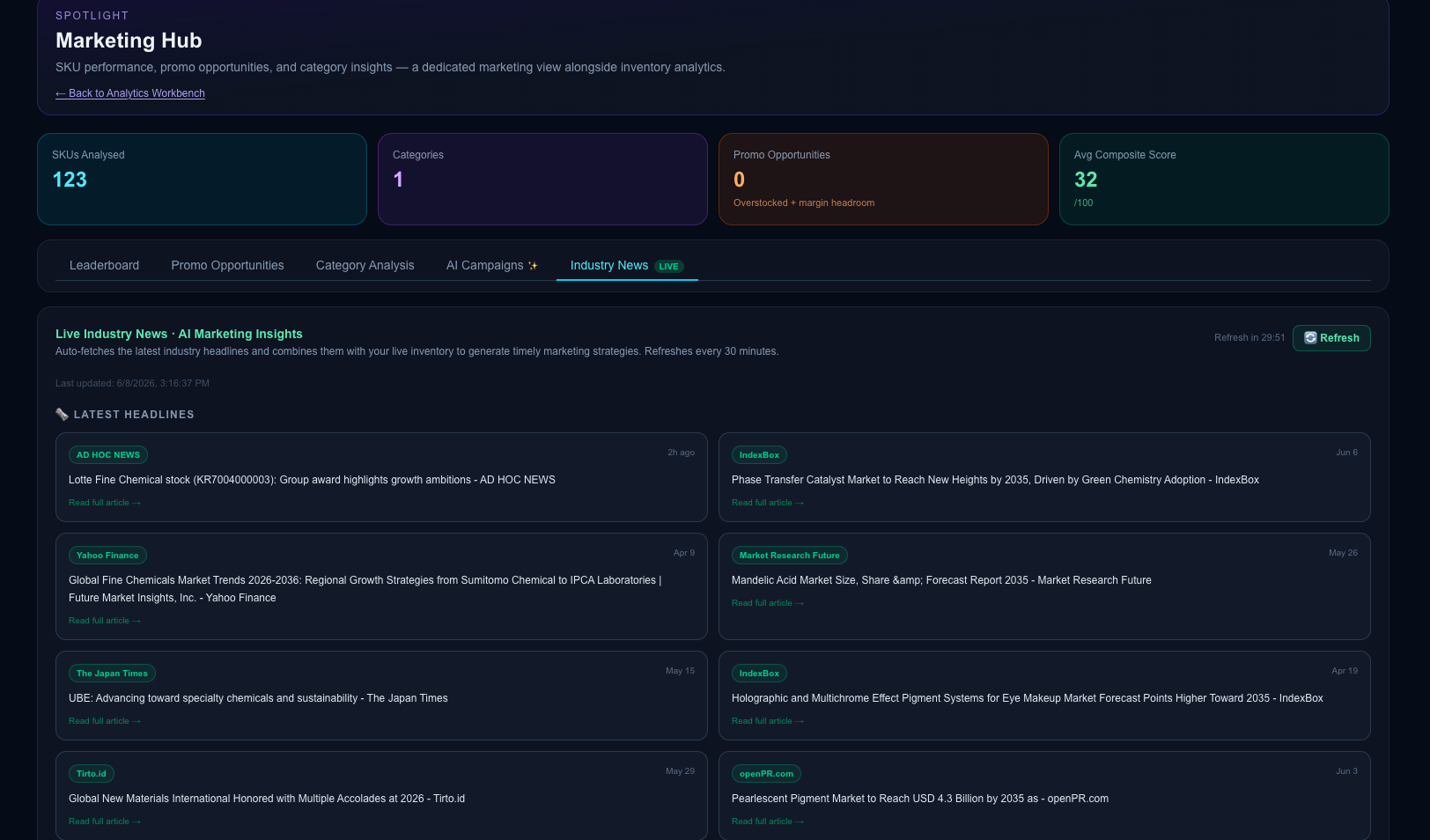
This module pulls live market headlines and combines them with current inventory context so commercial teams can react to industry shifts, promotional openings, and category-specific demand signals.
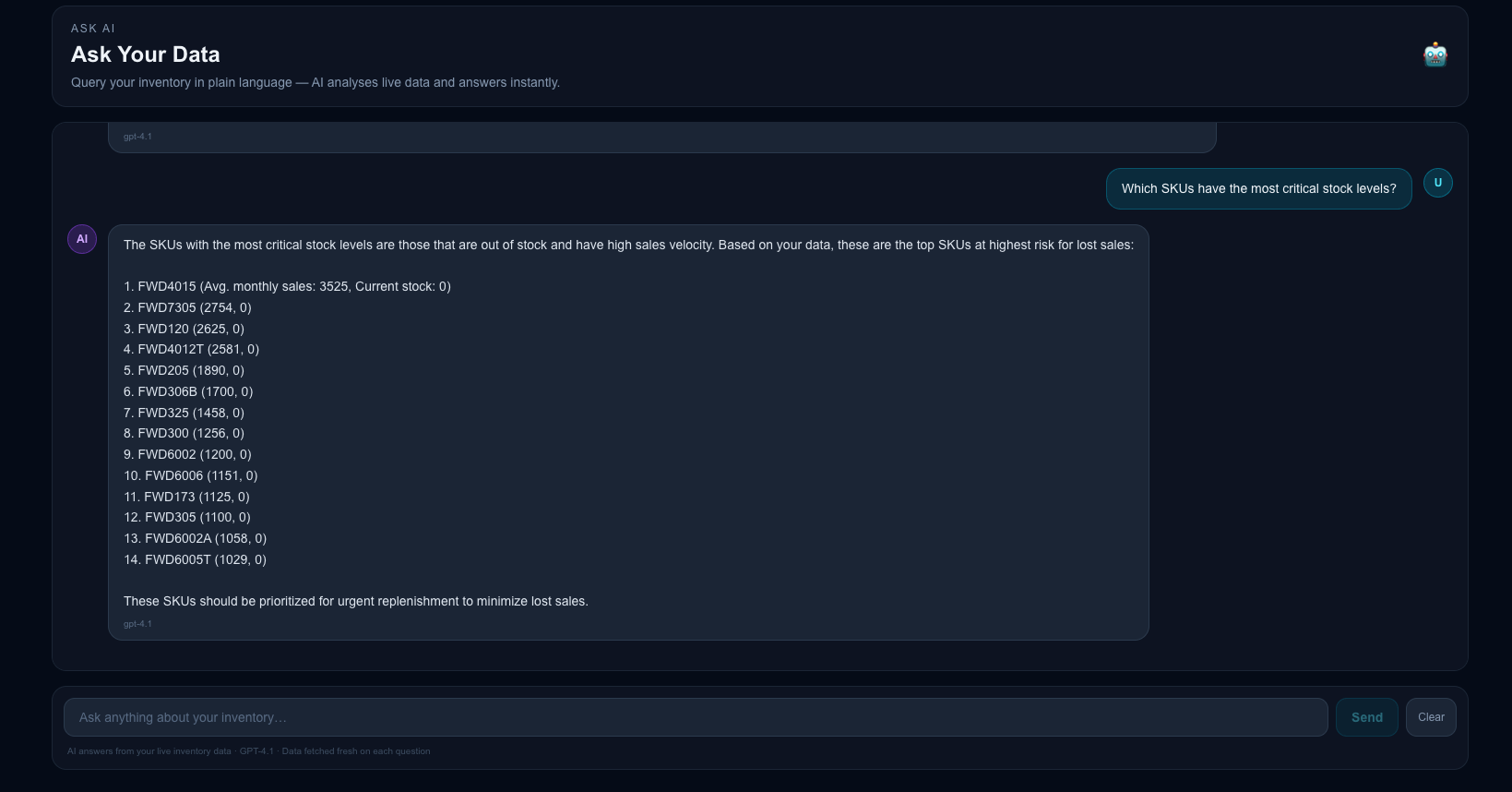
Users can ask plain-language questions such as which SKUs are most critical, and the assistant answers directly from live inventory data with actionable, ranked recommendations instead of forcing manual analysis.
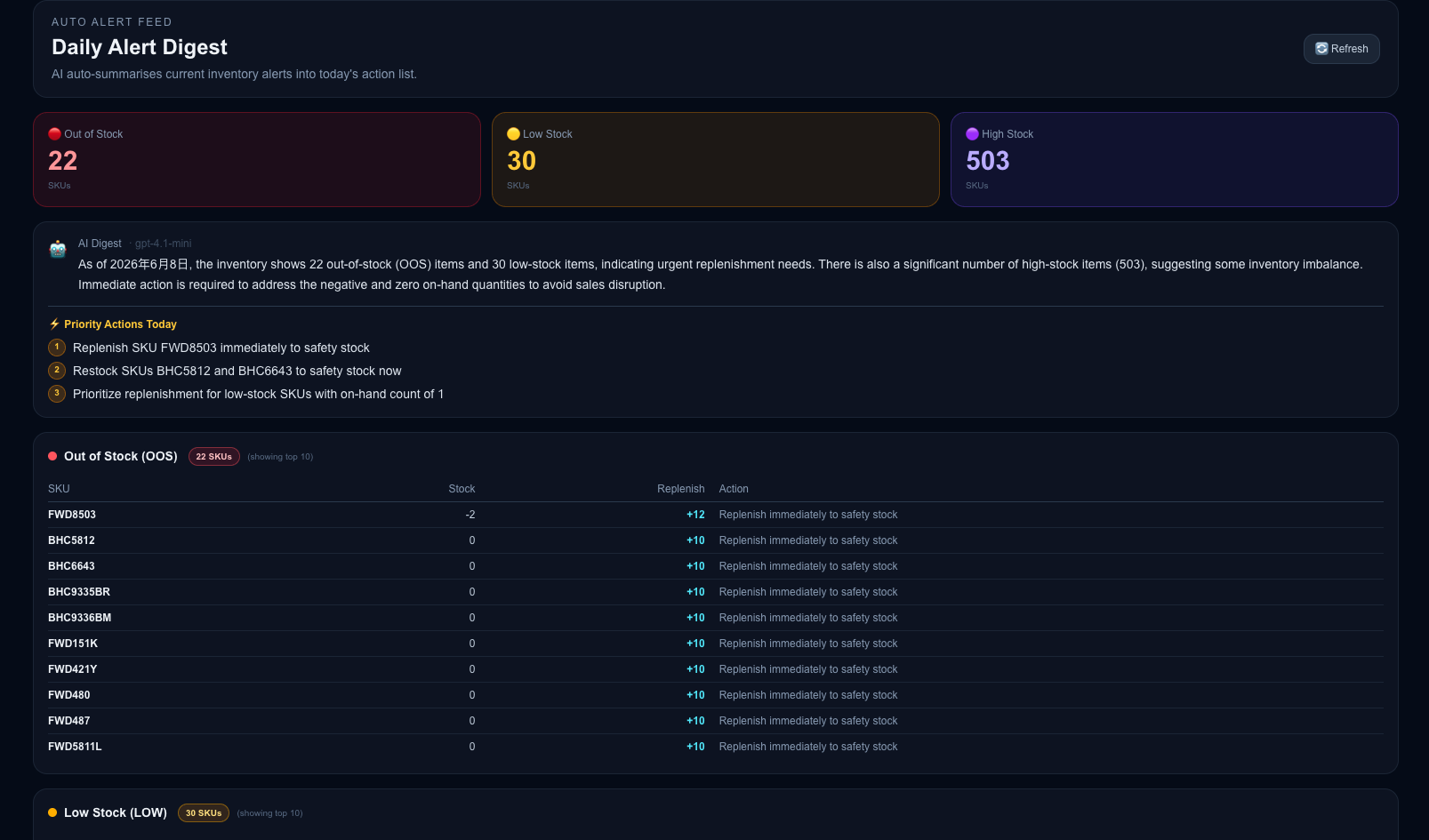
The digest converts raw OOS, low-stock, and high-stock signals into a daily action list, prioritizing what should be replenished first and giving supervisors a ready-made execution queue.
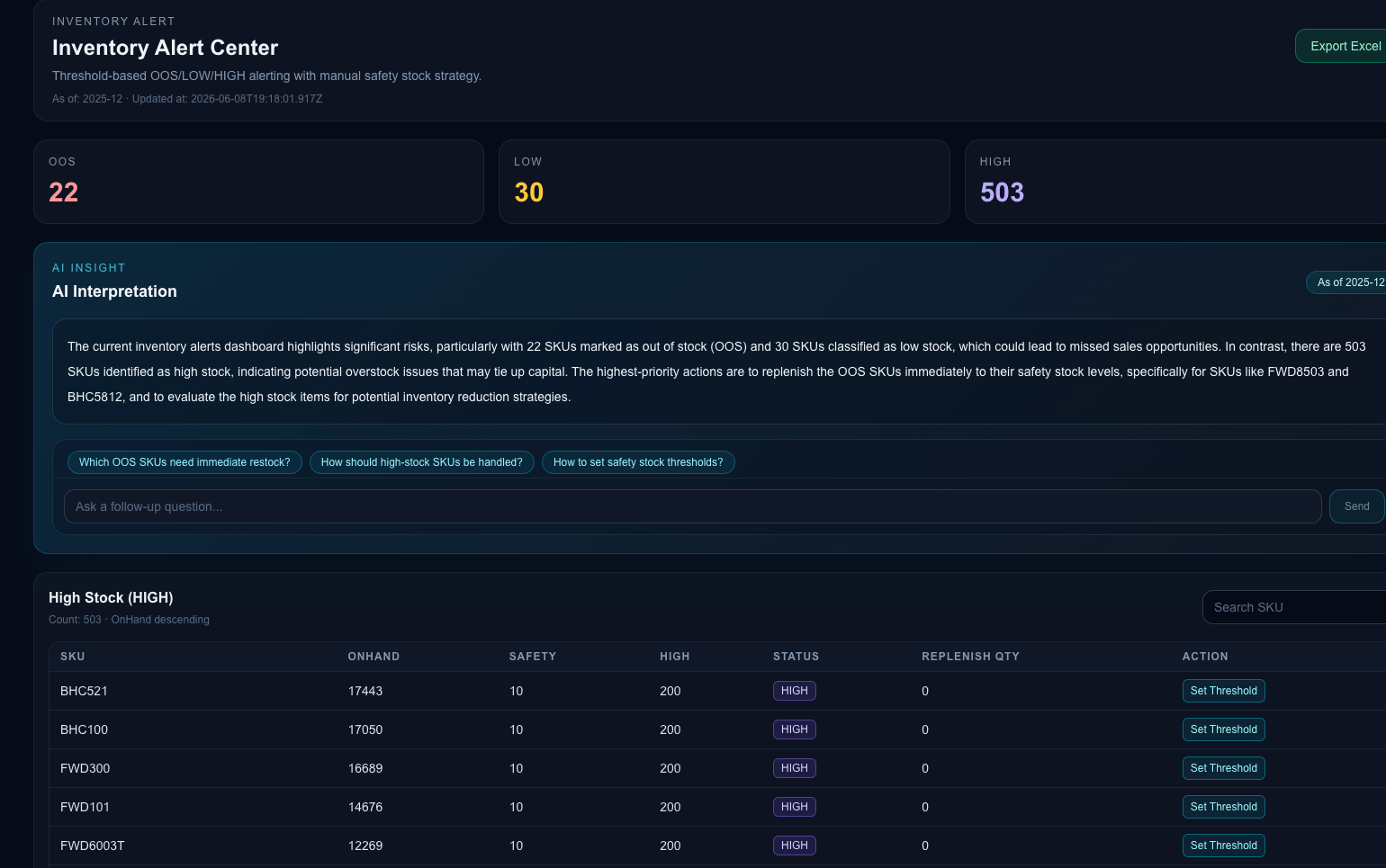
This alert center gives planners a more detailed control surface for threshold-based OOS, LOW, and HIGH logic, combining AI interpretation with SKU-level follow-up actions and export capability.
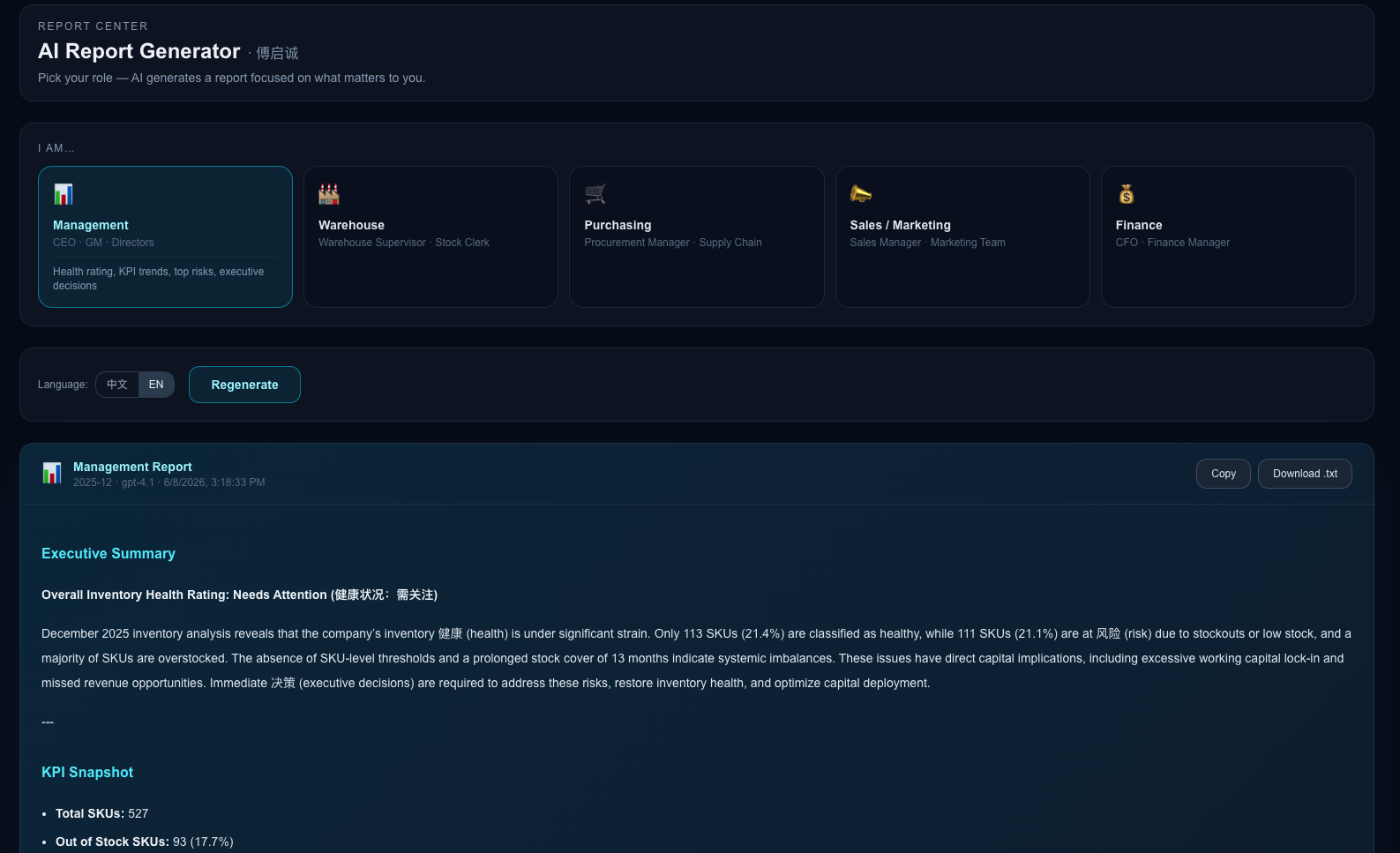
The reporting center packages the analysis into role-specific summaries for management, warehouse, purchasing, sales, or finance so each stakeholder receives a focused narrative instead of generic KPI dumps.
Applying systems thinking to real-world data and sustainability challenges.
Cross-disciplinary skills spanning industrial engineering, data science, and full-stack development.
Reach out for full-time opportunities, project discussions, or conversations around industrial engineering, supply chain, and operations analytics.